
Pfeil Tool Code Names Explained

Decoding Pfeil Cutting Tools can be confusing. When you haven't got the tools in front of you, it's difficult to know what tools may be the right shape and size to add to your kit. Read on for an explanation of the different tools names, and diagrams of all the shapes. We also have a video explaining the basics of the tool coding system here.
Pfeil tools are a high quality, long lasting cutting tools with a comfortable mushroom shaped handle. Both the 'L' tools (e.g. L11/1) and 'B' tools (e.g. B1/12) can be used for both wood and lino, but the 'B' tools are designed specifically for both. Some of the very finest L tools may be too fine for wood cutting. The 'L' range have a handle diameter of 54mm, the 'B' range have a handle diameter of 57mm.

Shape of the Tool/ Size of the Tool
The first number in the code relates to the shape of the tool: i.e. the '11' in L11/1. This is the number that appears on the metal part of the tool (see below). The numbers do not indicate a particular measurement, but relate loosely to the steepness of the shape: the higher the number, the steeper the curve. Numbers 1 - 11 are curved gouges.

The second number relates to the width of the tool in mm: i.e. the '1' in L11/1 refers to 1mm wide.
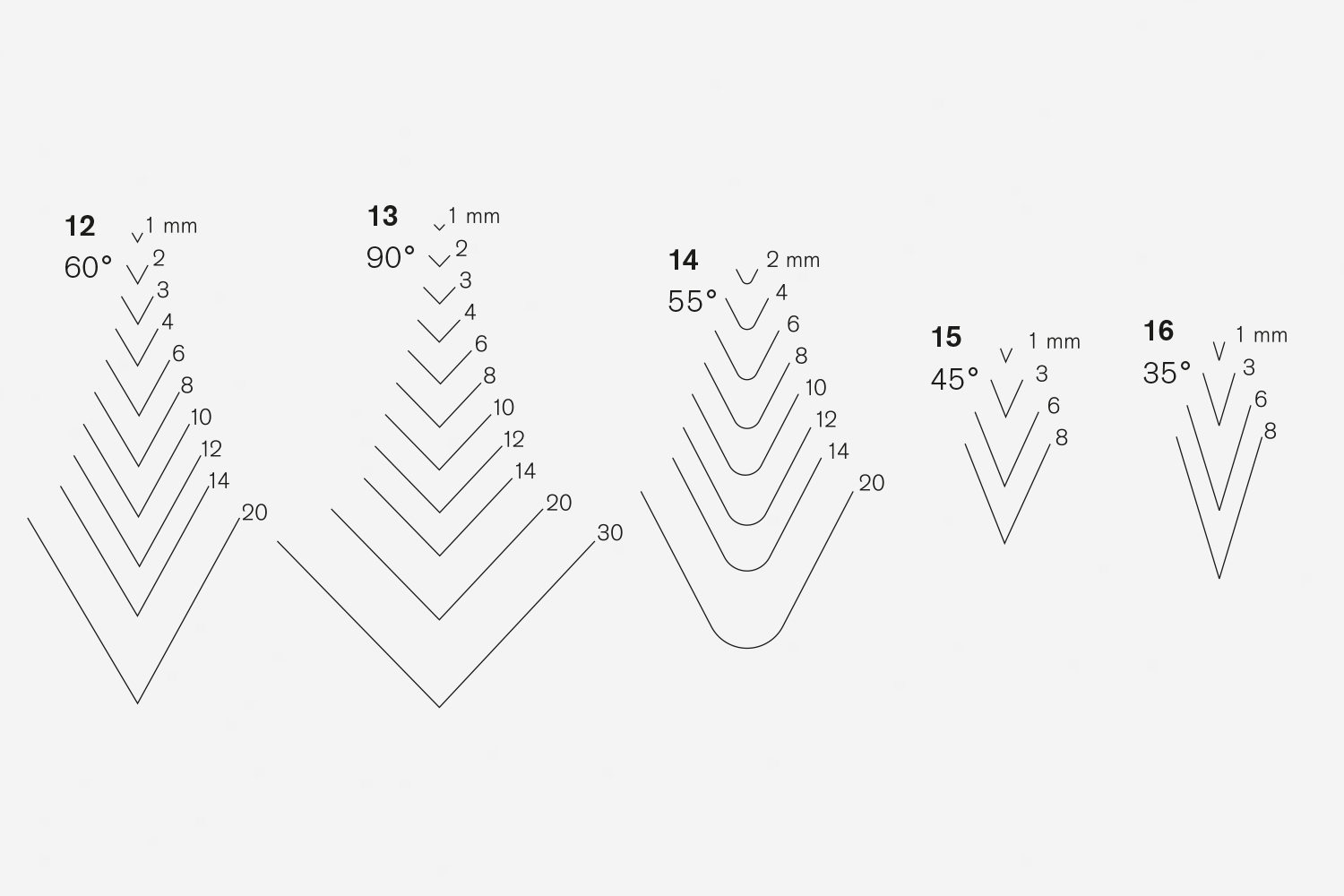
A diagram of the curved tool shapes and widths can be found below.
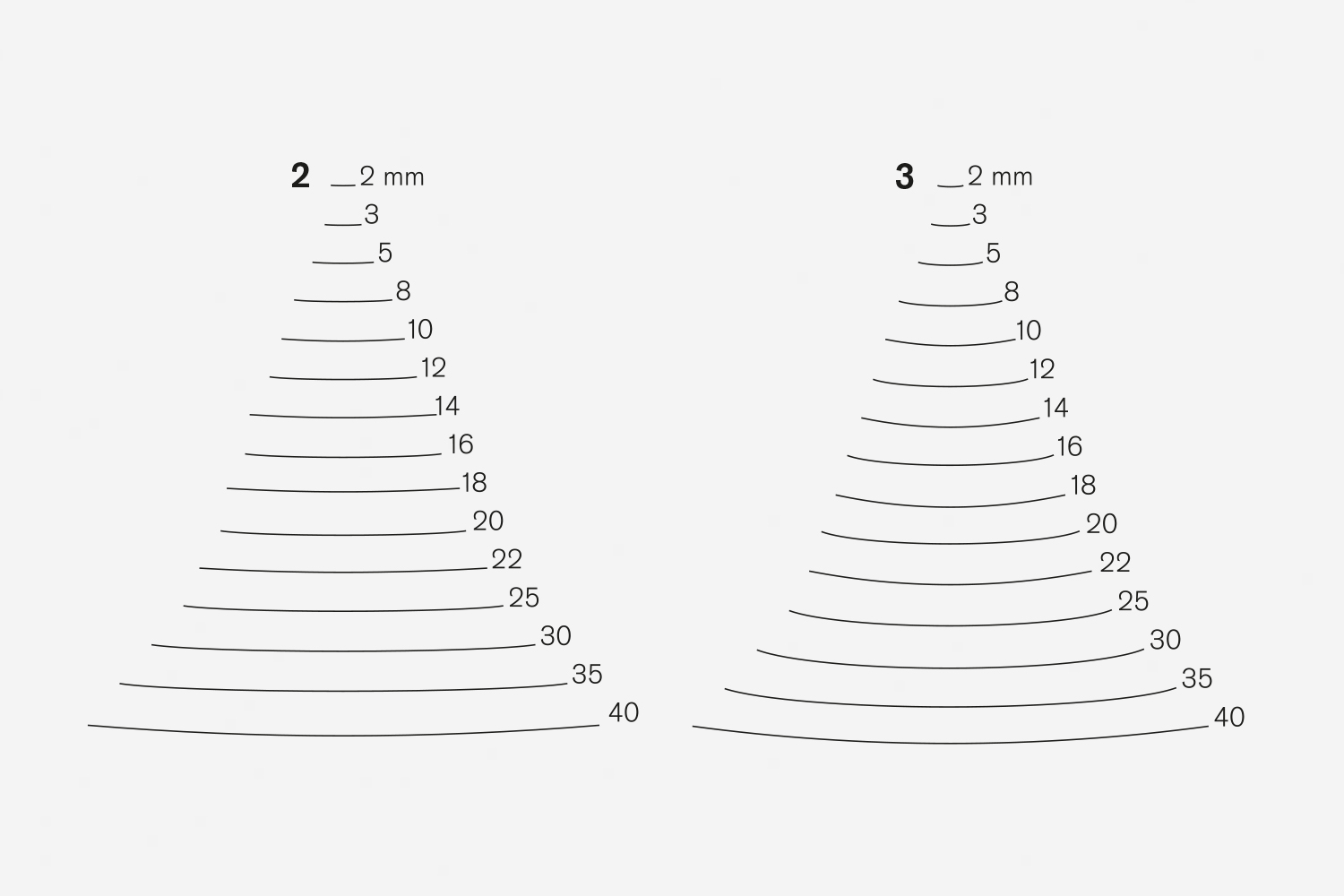
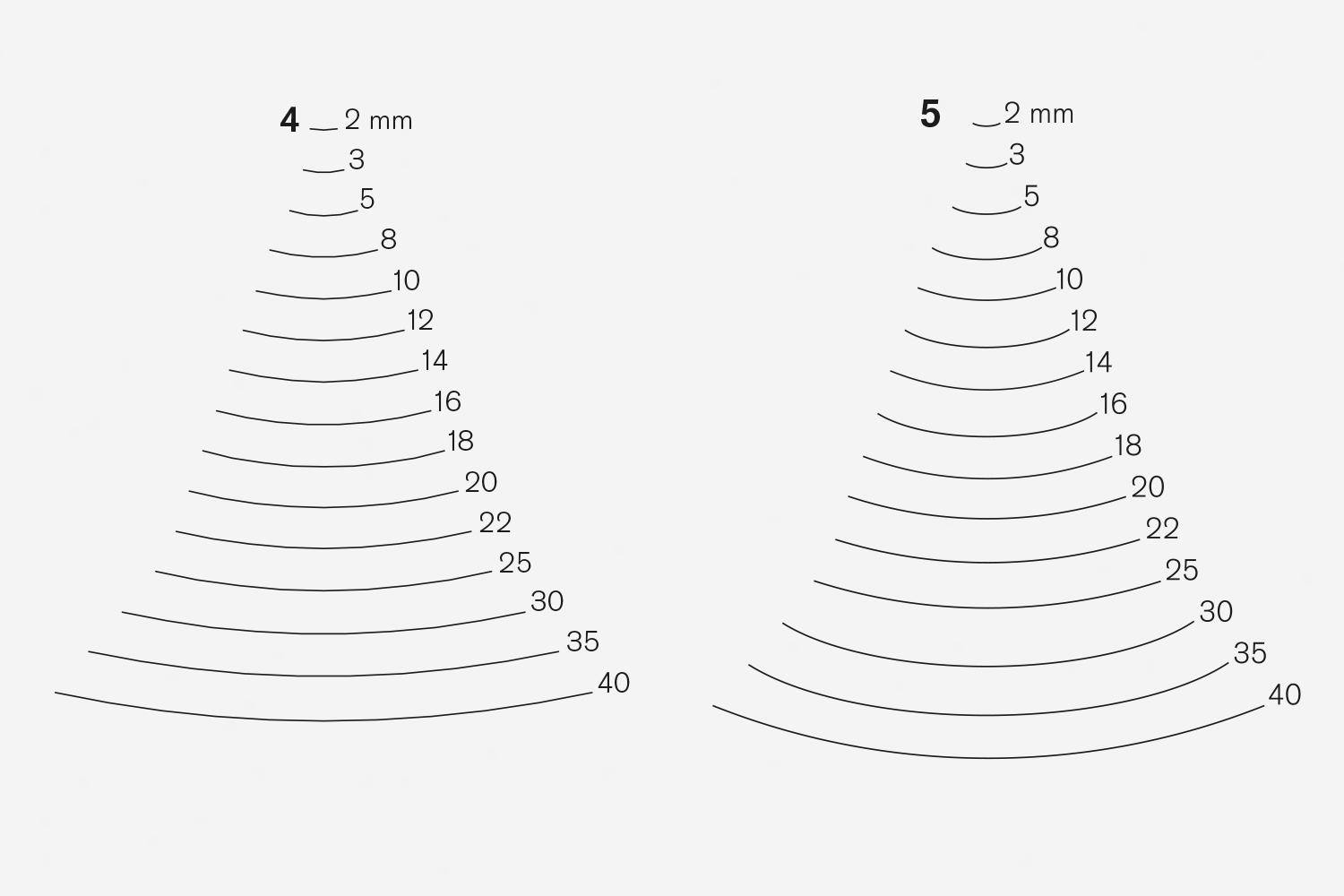
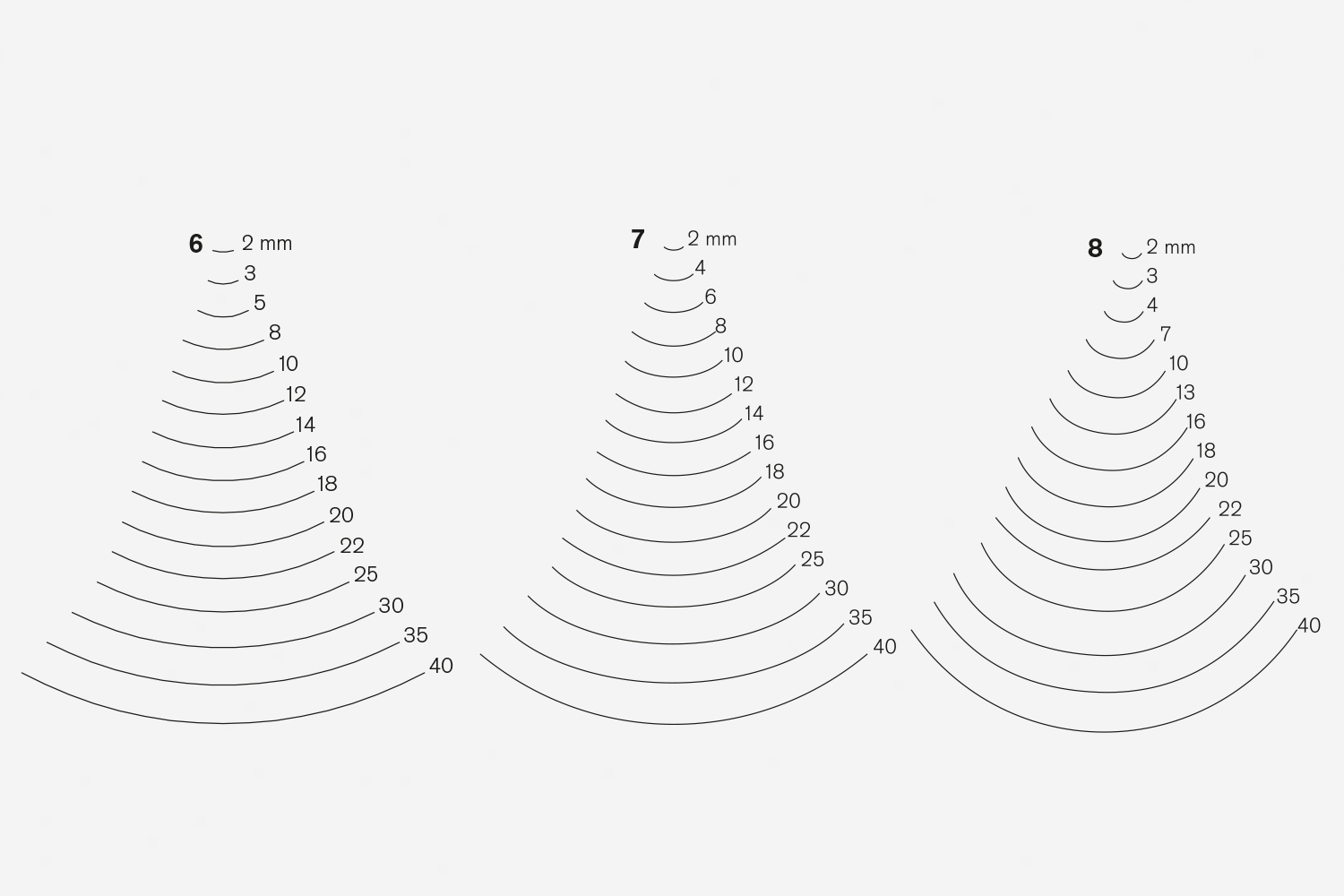
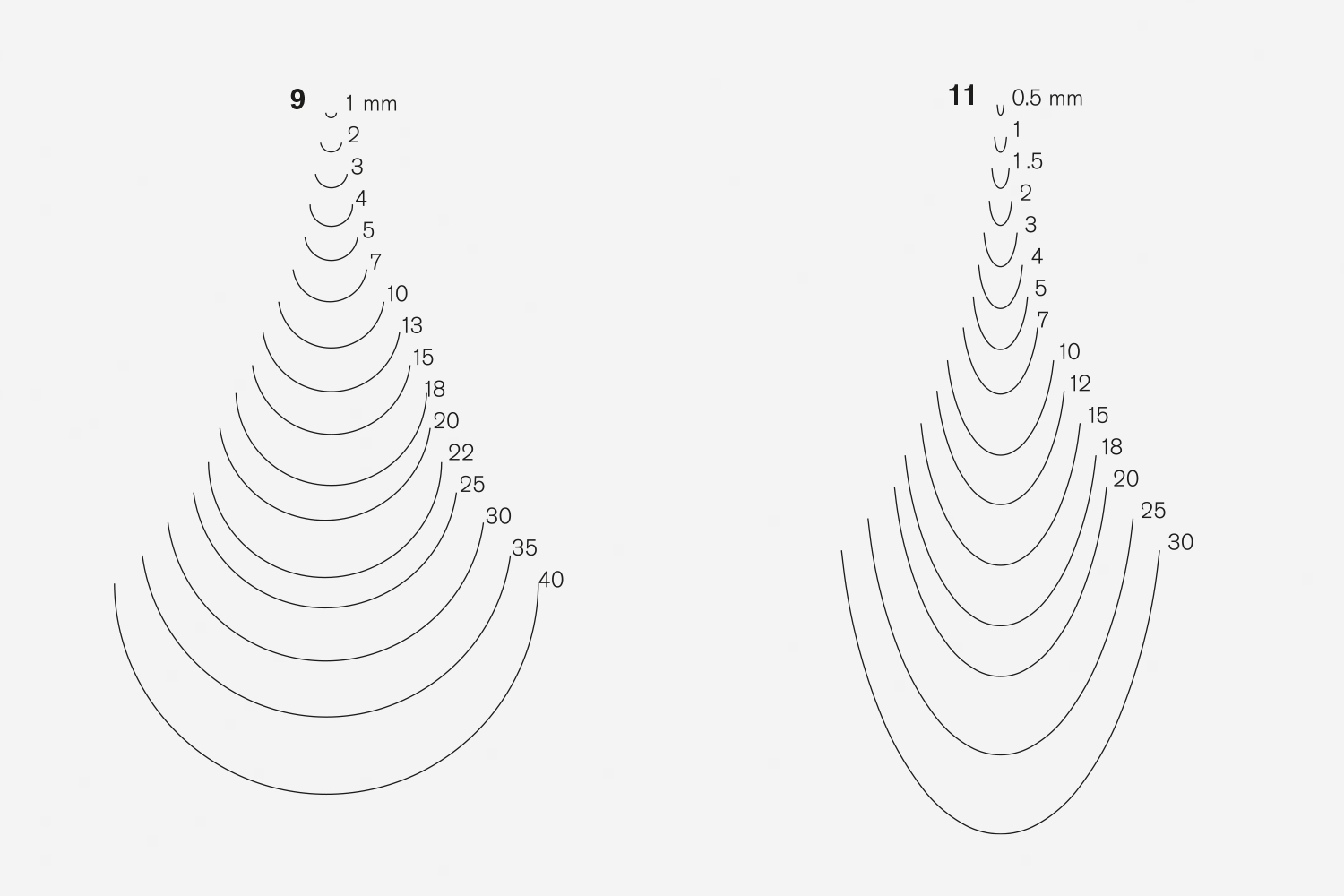
First numbers from 12 and above (e.g. L12/1) are V gouges of various angles. The '12' tools have a 60 degree angle. Others can be found in the diagram below.
Extra Letters Explained
If the code has an extra letter after the first number (e.g. B8a/10), it indicates another modification in the tool:
a = short bent or spoon bent shaft that allows for deeper and shorter cuts. Found on some V’s and the wider U’s.
L = long bent shaft that allows for deeper and shorter cuts. Found on some V’s and the wider U’s.
s = skew or angled edge, useful for precise cutting or accessing difficult to reach corners.
F = fishtail or splayed edge, again useful for accessing difficult to reach corners. Found on mallet handle woodcut range.
Examples Decoded
L 9/2
‘L’ means lino cutter
‘9’ means a number 9 curve, which is a deep U gouge
‘2’ means the curved cutting edge is 2mm wide
L 1s/8
‘L’ means lino cutter
‘1’ means a number 1 curve, which equates to a flat
‘s’ means the edge is skewed/angled
‘8’ means the cutting edge is 8mm wide
B 8a/10 (pictured below)
‘B’ means a woodblock and lino tool
‘8’ means a number 8 curve, which is a significantly curved U gouge
‘a’ means a short bent, or spoon bent shaft
‘10’ means a 10mm wide cutting edge

Pfeil Tools are available as individual tools, or sets A, B, C or D. (Set B pictured below) All our cutting tools can be found here.
