
Meet the Maker: Sam Marshall

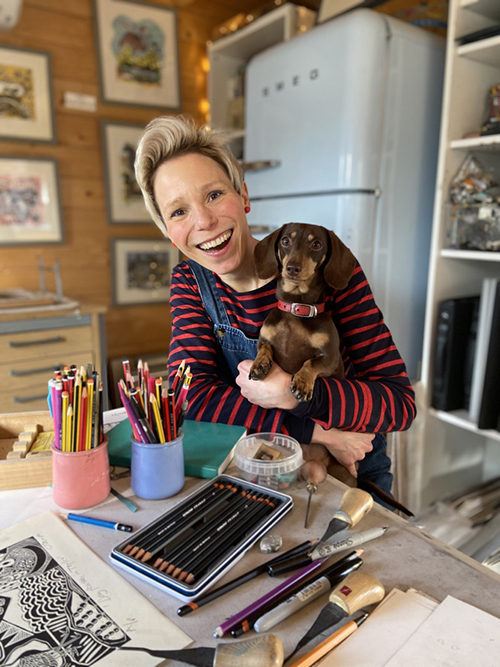
I'm Sam Marshall, an artist, printmaker, author and creative coach based in rural Northamptonshire. My work centres around drawing and printmaking, particularly linocut and etching, and alongside my own practice I teach workshops both from my studio and online to students around the world.
I studied at the Slade School of Fine Art and the Royal Drawing School, where I now also teach. Before moving back to the countryside eleven years ago, I spent more than two decades living in London. Today my days are divided between making work in the studio, teaching, writing and supporting artists through creative coaching.
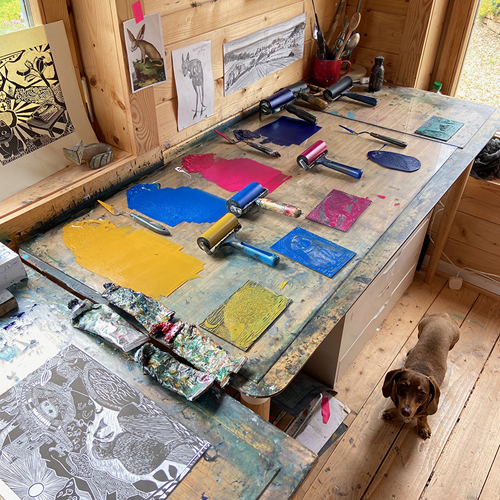
I also share my studio life with Miss Marple, my miniature dachshund, who has been my faithful sidekick for many years and is rarely far from the action.

Describe your printmaking process.
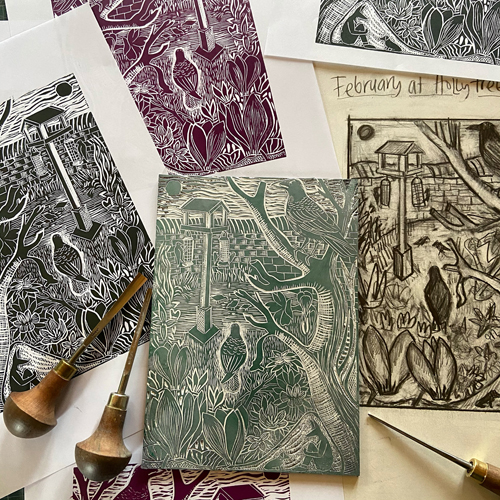
My printmaking process always begins with drawing. I've drawn all my life, and every print starts with a sketchbook in one way or another. I travel extensively with my sketchbooks, drawing from observation, and many of those drawings go on to inform my prints.
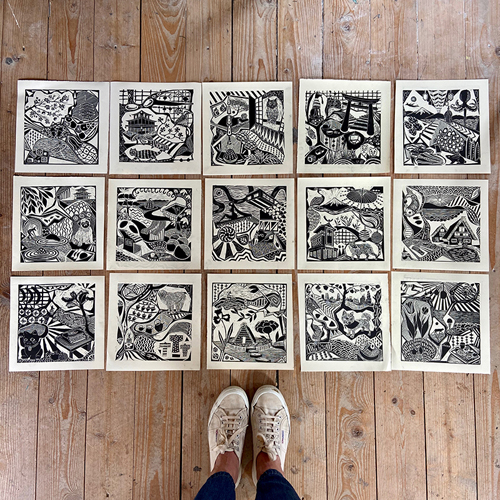
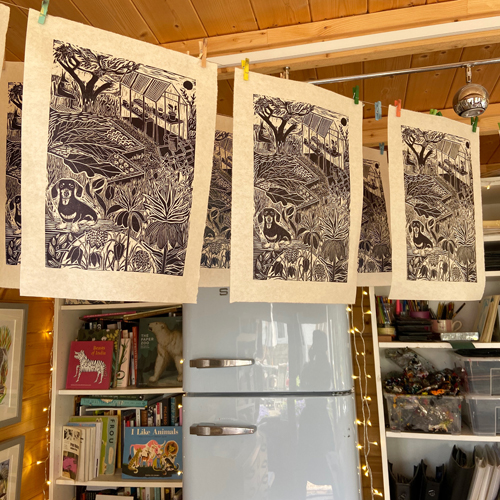
Rather than directly reproducing a drawing, I tend to use elements gathered from different sketches and experiences. My linocuts are often a kind of visual collage, combining fragments of places, buildings, landscapes and observations into imagined scenes. They are rooted in the real world, but there's usually a sense of storytelling, humour or quirkiness woven into them too.
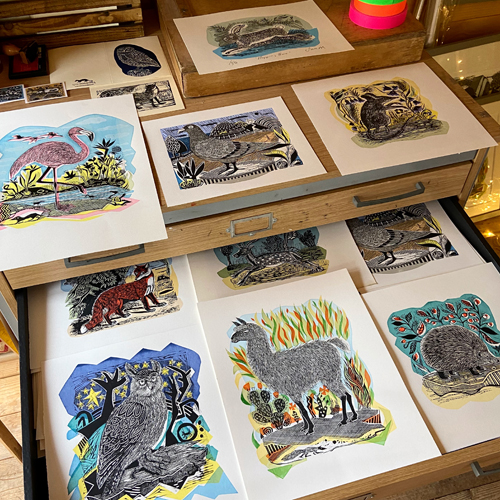
Alongside linocut, etching is a significant part of my practice and was actually the first printmaking process I learned. I particularly enjoy making small etchings featuring animals and characters, often exploring personality and narrative through simple compositions. Whatever the medium, drawing remains at the heart of everything I do.

 How and where did you learn to print?
Although I studied at the Slade School of Fine Art, and there was an excellent printmaking department there, I never actually used it. My introduction to printmaking came later, in my early thirties, when I discovered the Royal Drawing School and enrolled on an etching course.
It was a genuinely life-changing experience. I still remember leaving the studio after that first session and thinking, "That's it. I've found what I want to do." It was a real turning point and set me on the path that I'm still following today. I've now been making prints for over twenty years.
Linocut came along a few years later. I loved etching, but I was craving colour, and lino offered a completely different way of working. At the time there were far fewer resources available than there are now, so I largely taught myself through experimentation, trial and error, and plenty of mistakes. Looking back, I'm grateful for that process because it allowed me to develop my own approach rather than following a prescribed method. My way of working has evolved quite naturally from years of making, testing ideas and learning through practice.

Why printmaking?
I think one of the reasons I love printmaking so much is that it forces me to slow down. By nature, I'm quite energetic, impatient and always keen to move on to the next idea, whereas printmaking demands patience. There are no shortcuts.
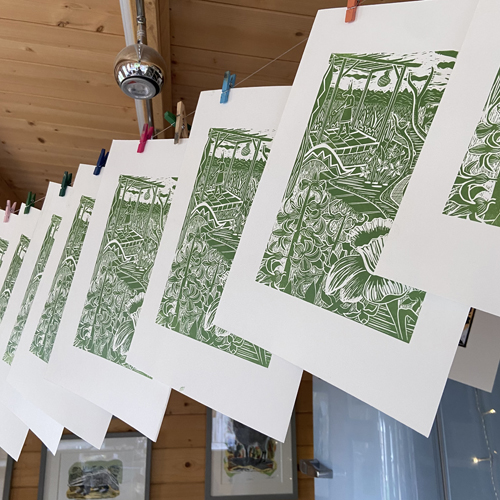
I love the way a print evolves through a series of stages. It begins with a drawing, but then it has to pass through many different processes before it becomes a finished piece. There are proofs to pull, decisions to make, areas to refine and problems to solve along the way. I enjoy that gradual process of editing and improving the work.
One of my favourite moments is when I've finished the proofing stage and finally decide that the print is ready. There's something incredibly satisfying about committing to an edition and printing it properly. After all the experimentation and refinement, the image reaches a point where it's complete. I never tire of that feeling.
Printmaking combines creativity, craftsmanship and problem-solving in a way that I find endlessly rewarding. Even after all these years, I still enjoy every stage of the process.

Where do you work?
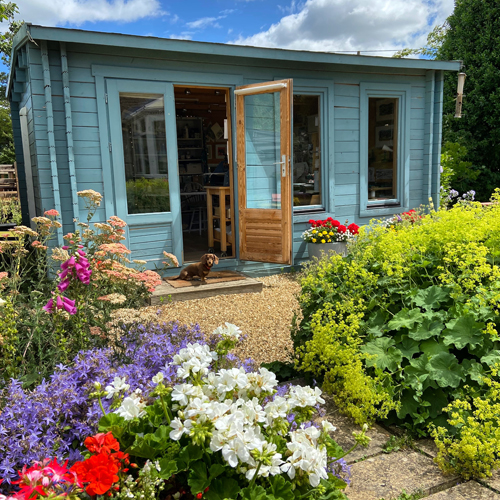
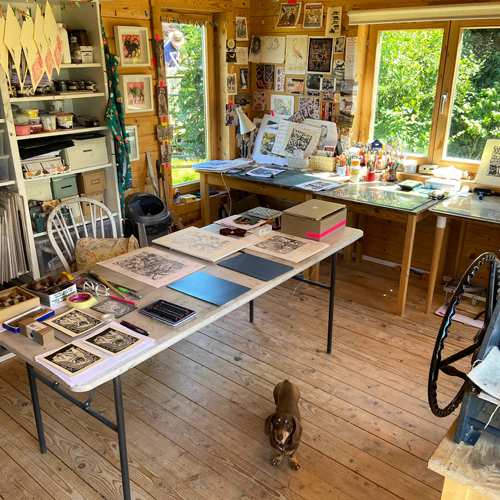
I work from home in rural Northamptonshire, where I'm fortunate to have two separate studio spaces. One is dedicated to printmaking, while the other is where I do my coaching, administration and order packing.
At the moment, I'm also in the process of creating a larger printmaking studio. I've recently demolished an old garage and am transforming the space into a purpose-built workshop and teaching studio. It's a project I've been dreaming about for a long time and I'm incredibly excited about it.
My current print studio is a wonderful place to work, but it's quite small and only accommodates a handful of students. The new space will allow me to teach larger groups and bring more people together to learn printmaking in a relaxed, creative environment. It feels like a very exciting new chapter for both my own practice and my teaching.

Describe a typical day in your studio.
No two days are ever quite the same, but most of them begin in the same way: with a run through the woods behind my house with my miniature dachshund, Miss Marple. It's often during those runs that I plan my day, record voice notes and think through ideas for new work.
By the time I arrive in the studio, I usually have a clear sense of what needs to happen. The morning might begin with packing print orders, answering emails or preparing materials for workshops and coaching sessions. Alongside my printmaking practice, I also work as a creative coach, so my day is often punctuated by Zoom calls with artists and creatives from around the world.
Whenever possible, I try to dedicate at least a few hours each day to my own creative work. That might mean drawing, carving a new linocut, working on an etching plate, proofing prints or planning future projects. There are also podcasts to record, workshops to organise and the countless jobs that come with running a small creative business.
It's a busy and varied life, but that's one of the things I enjoy most about it. Every day is slightly different, and there's always a balance between making work, teaching and supporting other creatives.

How long have you been printmaking?
I've been printmaking for around twenty-two years. My journey began with etching at the Royal Drawing School, and what started as a weekly class quickly became a lifelong passion.
Since then, printmaking has become the centre of my creative practice. Over the years I've explored a range of processes, but etching and linocut remain my favourites. Even after more than two decades, I still find the process as exciting and rewarding as I did when I first stepped into the print studio.

What inspires you?
I'm inspired by everyday life and the small moments that many people might overlook. Most of my ideas come from observation, whether that's walking in my local countryside, spending time in my garden, travelling with my sketchbook, or exploring places around the world.
Places are a huge source of inspiration for me. I find myself drawn to parks, gardens, cafés, streets, landscapes and the little details that give a place its character. Japan has been a particularly important source of inspiration in recent years, both visually and culturally.
Animals also appear regularly in my work, often bringing a sense of humour or narrative to an image. I keep sketchbooks wherever I go, and those drawings become a kind of visual library that I can draw from later. Ultimately, my work is rooted in observation and a fascination with the world around me.

What is your favourite printmaking product?
My favourite printmaking product has to be my Swiss-made Pfeil carving tools. They're beautifully made, hold their edge brilliantly and make carving linocut an absolute pleasure.
Good tools don't make a good printmaker, but they do make the process more enjoyable, and I've used my Pfeil tools for years. There's something incredibly satisfying about the way they glide through the lino, allowing me to create both delicate marks and bold cuts with confidence.
If my studio was on fire, they'd probably be one of the first things I'd grab on the way out!

What have you made that you are most proud of?
Without a doubt, the things I'm most proud of are my books.
When Bloomsbury first approached me about writing LINOCUT, it came completely out of the blue. It was a huge challenge and an enormous learning curve, but it went on to become far more successful than I ever imagined. Seeing my work and approach to printmaking reach readers around the world has been incredibly rewarding.
More recently, SKETCH has become another source of great pride. What makes that book particularly special is that it doesn't just feature my own work, but also celebrates the journeys of many of the artists and creatives I've worked with over the years. In many ways it brings together everything I care about: drawing, teaching, creativity and community.
Even now, I sometimes find it hard to believe that there are two books out in the world with my name on the cover. That's something I'll never take for granted.


Where can we see your work? Where do you sell?
The best place to find my work is through my website, which acts as the hub for everything I do. Alongside original prints and books, you'll also find information about workshops, online classes, creative retreats and coaching.
A few years ago I made the decision to step away from gallery representation and wholesale selling. Instead, I chose to build a direct relationship with the people who collect my work. Running my own shop gives me much greater creative freedom and allows me to retain ownership of every part of the process, from making the work through to sending it out into the world.
I also teach regularly at printmaking studios and arts organisations around the UK, including Handprinted, Curwen Print Study Centre and the Royal Drawing School, as well as from my own studio in Northamptonshire.
You can find everything in one place at my website and on Instagram, where I share my work, sketchbooks and studio life.

What will we be seeing from you next?
The biggest project on the horizon is my new printmaking studio. It's currently being built and, once complete, it will give me much more space to make work and to teach larger groups from home. It's something I've been planning for a long time, so I'm very excited to see it finally becoming a reality.
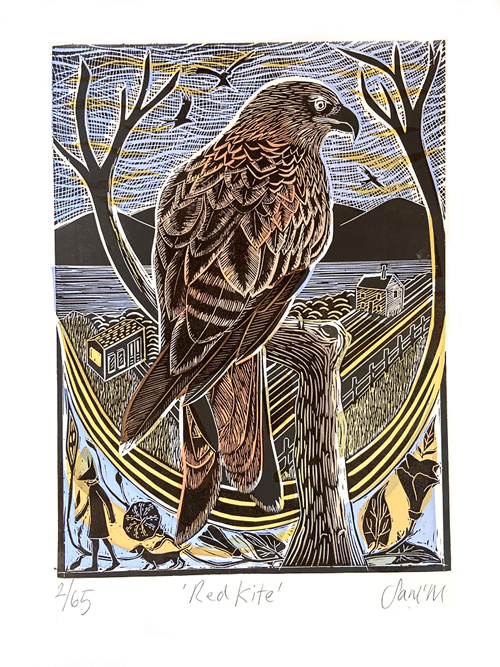
Alongside that, I'm continuing to develop new linocuts and etchings, many of them inspired by recent travels and sketchbook work. There are also plenty of workshops, retreats and teaching projects coming up over the next year, both in my own studio and at venues around the UK.
In short, more prints, more teaching and, hopefully, lots of time spent in the new studio.

Do you have any advice for other printmakers and creatives?
My biggest piece of advice would be to draw. Draw as much as you can, and draw from observation whenever possible. For me, drawing is the foundation of everything. It's where ideas begin, where you learn to look more carefully, and where you develop your own visual language.
I'd also encourage people to focus on making the work they genuinely want to make, rather than constantly worrying about what might sell. I think a lot of creatives tie themselves in knots over pricing, marketing and trying to second-guess an audience. Those things matter, of course, but they shouldn't come at the expense of making work that excites you.
Try to enjoy the process and not become too attached to the outcome. The artists who sustain a creative practice over the long term are usually the ones who find joy in the making itself. If you can do that, everything else tends to fall into place.

To see more from Sam follow her on Instagram.
Feeling inspired? Come on down to Bognor Regis, where Sam will be teaching here at Handprinted! :
Linocut with Sam Marshall - 2 day course - Thurs 20th & Friday 21st August 2026
Experimental Printmaking with Sam Marshall - 2 day course - Sat 22nd and Sun 23rd August 2026
Spaces are limited. If we are fully booked, please email shop@handprinted.co.uk to be added to the waiting list!
Alternatively, if you're interested in practising Sam's favourite techniques at home, visit our website to get started!